Septic Tank Pumping in Nampa, ID
Septic tank pumping service in Nampa and the Treasure Valley. Learn the warning signs, the process, and how local soil affects pumping frequency.
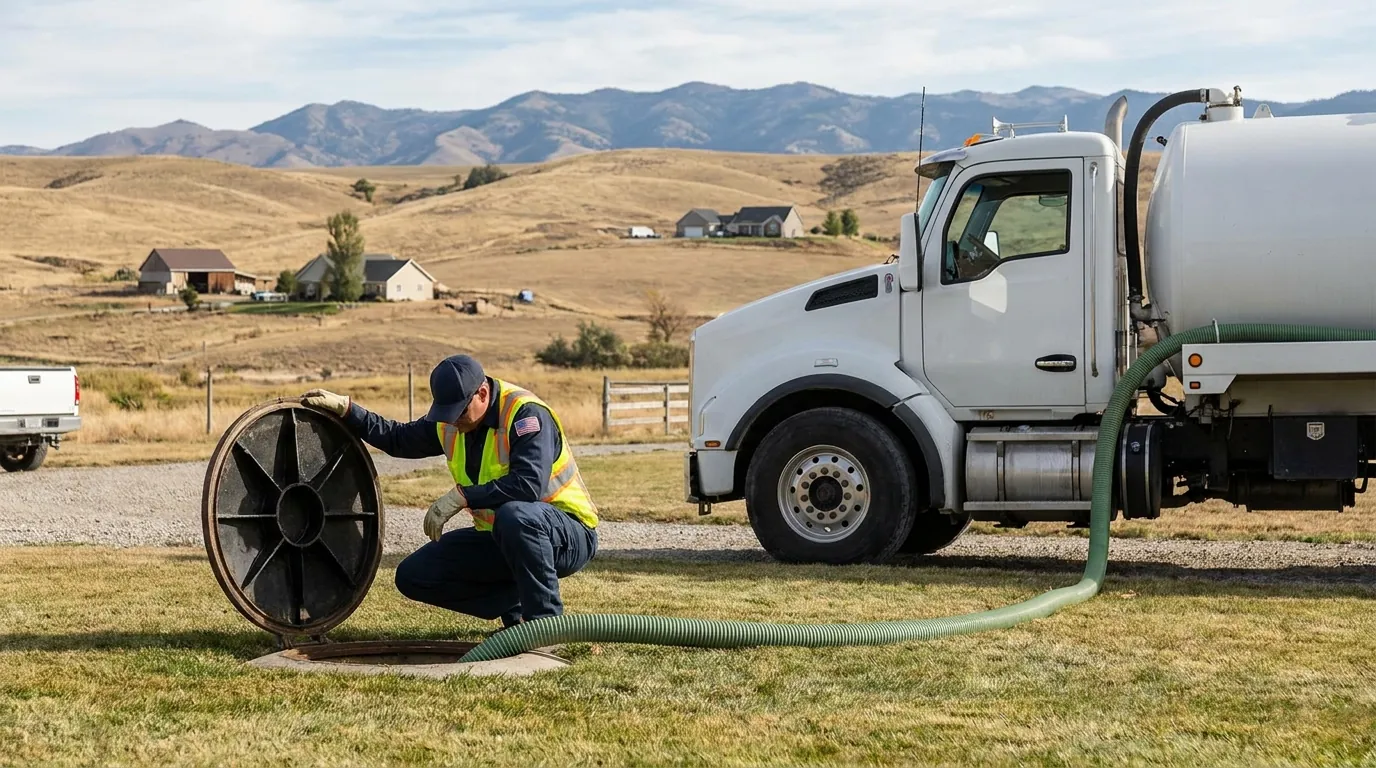
Why pumping matters
A septic tank works by holding wastewater long enough for solids to settle to the bottom as sludge and for grease and lighter material to rise as a scum layer on top. The relatively clear liquid in the middle flows out to the drain field. Over time the sludge and scum layers keep building, and once they crowd the outlet, solids start escaping toward the drain field where they cause clogging that is expensive to fix. Regular septic tank pumping removes those layers before they reach that point.
This page covers what our septic tank pumping service involves in Nampa and the surrounding Treasure Valley. If you are noticing slow drains, gurgling, or odors, those are early warning signs worth acting on. If you are not sure whether the tank is the problem, a septic system inspection can locate the cause before you commit to any work.
What septic tank pumping involves
The visit is straightforward once the tank is located and the lid is exposed.
-
Locate and open the tank
We find the access lids and clear enough soil to open them. On older Nampa-area properties the risers are sometimes buried a foot or more down, which adds time. If you know where your lids are, telling us up front speeds the job.
-
Measure sludge and scum
Before pumping, we check the sludge and scum depths. This tells us how full the tank actually was and gives you a realistic interval for the next pump-out based on how your household uses the system.
-
Pump the full tank
We pump both compartments completely, not just the liquid off the top. Removing only the liquid leaves the sludge behind and defeats the purpose, so we draw down to the bottom on every chamber the tank has.
-
Inspect the interior
With the tank empty we look at baffles, the outlet tee, and the walls for cracks or backflow from the drain field. Problems found here are easier to fix before they become emergencies.
-
Secure the lids
We reseat the lids and backfill any soil we removed, leaving the access ready for next time. We record the sludge readings so your next interval is based on data, not a guess.
Local soil and how often to pump
Nampa sits on the alluvial and volcanic soils of the Treasure Valley, and those soils vary a great deal from one neighborhood to the next. Where the ground drains freely, the drain field accepts effluent well and the whole system runs cleaner. Where soils are tighter or the water table sits high near the Boise and Snake River bottoms, effluent leaves the tank more slowly and solids have more time to accumulate — which shortens the safe interval between pump-outs.
Dry Nampa summers concentrate household water use, and cold winters slow the biological activity inside the tank, so the numbers on a generic pumping schedule rarely match a real Idaho property. That is why we measure sludge on every visit instead of relying on a fixed calendar. If your drain field is already struggling, pairing pumping with drain field service usually makes more sense than pumping alone.
Most single-family homes fall in a three-to-five-year window, but a large household on a smaller tank can need service far sooner. We serve Nampa along with Caldwell, Meridian, Star, Kuna, Eagle, and Boise City.
Frequently asked questions
How often should I have my septic tank pumped?
Most households in the Nampa area land between three and five years, but tank size, number of people, and how well your drain field drains all shift that. We measure sludge and scum on each visit so your next interval reflects your actual system rather than a generic rule.
Do you pump the whole tank or just the liquid?
We pump the tank completely, drawing down the sludge at the bottom of every compartment. Pumping only the liquid leaves the heavy solids behind, which is what actually threatens the drain field, so a partial pump-out does not do the job.
What drives the cost of septic tank pumping?
Tank size, how deep the lids are buried, how much sludge has built up, and access for the truck are the main factors. A buried or hard-to-reach lid adds digging time. We can talk through what applies to your property when you call.
Can I locate my tank before you arrive?
Yes, and it helps. If you know where the access lids are or can point to the general area, we spend less time searching. Many Nampa homes have the tank a short distance downhill from the house on the sewer line.
Talk to someone about your job
Call to describe the problem and get a quote for work in Nampa, ID.