Septic Tank Cleaning in Nampa, ID
Septic tank cleaning in Nampa and the Treasure Valley. The difference from pumping, warning signs, and how local soil affects your schedule.
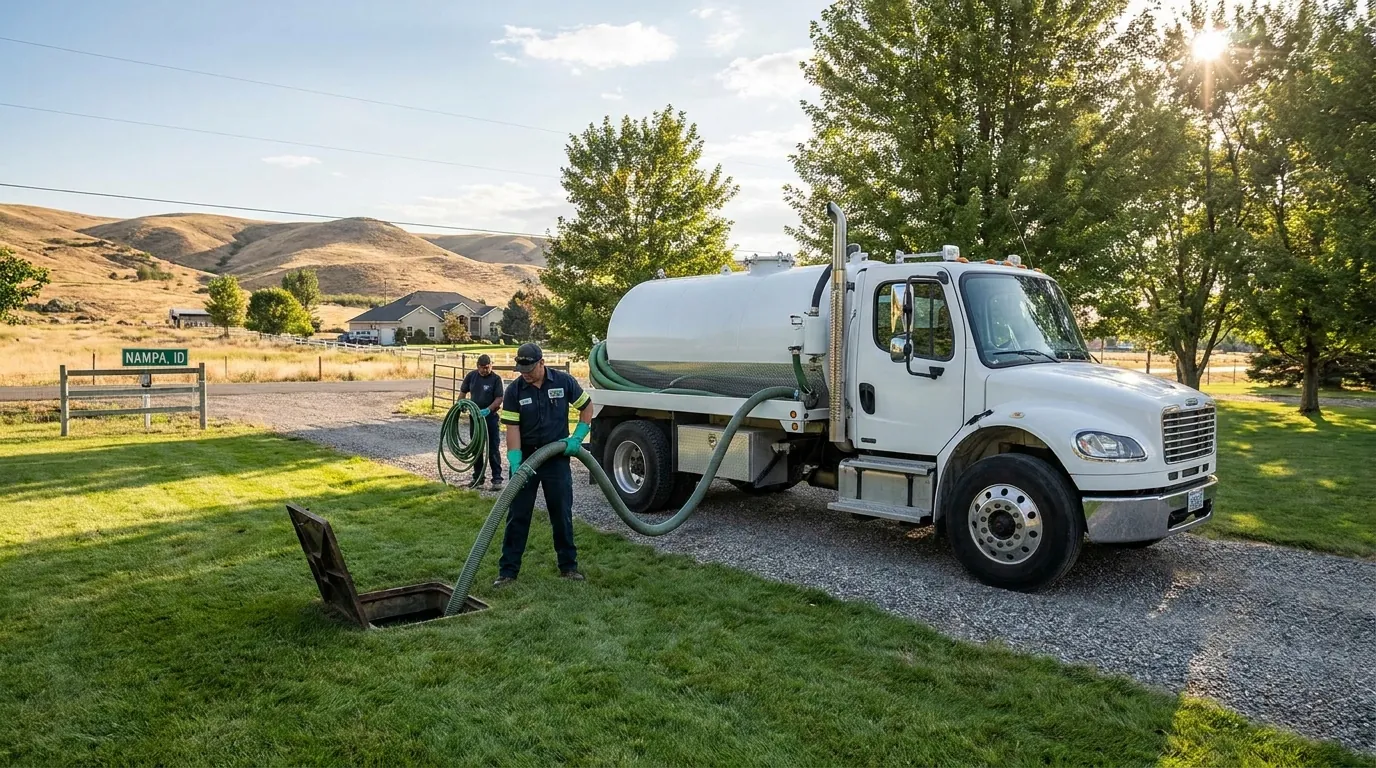
Cleaning versus pumping
People use 'pumping' and 'cleaning' interchangeably, but there is a real difference. Pumping removes the liquid and the loose sludge that a vacuum hose can pull out. Cleaning a septic tank goes further: it breaks up and removes the compacted sludge and hardened scum that settle and stick to the bottom and walls, the material a straight pump-out often leaves in place. Over years, that stubborn layer keeps shrinking the tank's working volume even right after a pumping visit.
If your tank seems to fill up again quickly after being pumped, or if it has gone many years between service, a full cleaning of the septic tank restores the capacity you are actually paying for. Cleaning is also the right call before selling a home or after a system has been neglected.
How septic tank cleaning works
Cleaning takes the same access as pumping but goes deeper into the tank.
-
Pump the tank down
We remove the liquid and loose sludge first, the same way a standard pump-out begins, so we can reach the compacted material underneath.
-
Break up compacted solids
We agitate and loosen the hardened sludge and scum that cling to the floor and walls. This is the step a routine pump skips, and it is what actually recovers lost capacity.
-
Remove the loosened material
Everything broken loose is vacuumed out so the tank is genuinely empty, not just drained of liquid.
-
Inspect the clean tank
An empty, clean tank shows its true condition — baffle wear, cracks, and any sign of the drain field backing up. We flag anything that needs attention.
-
Close up and record
We reseat the lids, backfill, and note what we found so you have a baseline for the next visit.
Why Nampa soil and water matter
The rate at which a tank builds hardened sludge depends partly on how quickly effluent leaves it, and that comes back to the drain field and the soil beneath it. In the tighter or wetter soils found in parts of the Treasure Valley, effluent moves out slowly and solids have longer to settle and compact, so cleaning becomes worthwhile sooner. In fast-draining volcanic ground the tank tends to stay in better shape between services.
Nampa's cold winters slow the bacteria that break down solids, so material accumulates faster in the colder months than a warm-climate schedule would suggest. If your system also shows drain field symptoms, combine cleaning with a septic system inspection so you are not treating the symptom and missing the cause. Routine septic tank pumping between deep cleanings keeps things manageable. We clean tanks throughout Nampa, Caldwell, Meridian, Star, Kuna, Eagle, and Boise City.
Frequently asked questions
What is the difference between septic tank cleaning and pumping?
Pumping removes the liquid and loose sludge a vacuum can reach. Cleaning also breaks up and removes the compacted sludge and hardened scum stuck to the tank floor and walls, restoring capacity that a straight pump-out leaves behind.
How do I know my tank needs a full cleaning?
If the tank seems to fill again soon after a pump-out, if it has gone many years without service, or if you are preparing to sell, a full cleaning is usually the right step. Measuring the sludge depth confirms how much has hardened in place.
How often should a septic tank be cleaned?
Most homes handle routine pumping every few years and a deeper cleaning less often, but the interval depends on tank size, household size, and how well your drain field drains. Nampa's cold winters slow solids breakdown, so accumulation can be faster than warm-climate guidance suggests.
Do you inspect the tank while it is clean?
Yes. An empty, clean tank is the best time to check the baffles, walls, and outlet for wear or cracks, and to spot signs of the drain field backing up. We tell you what we find so you can plan ahead.
Talk to someone about your job
Call to describe the problem and get a quote for work in Nampa, ID.