Grease Trap Pumping in Nampa, ID
Grease trap pumping for Nampa-area restaurants and kitchens. Keep grease out of your lines and system with regular scheduled service.
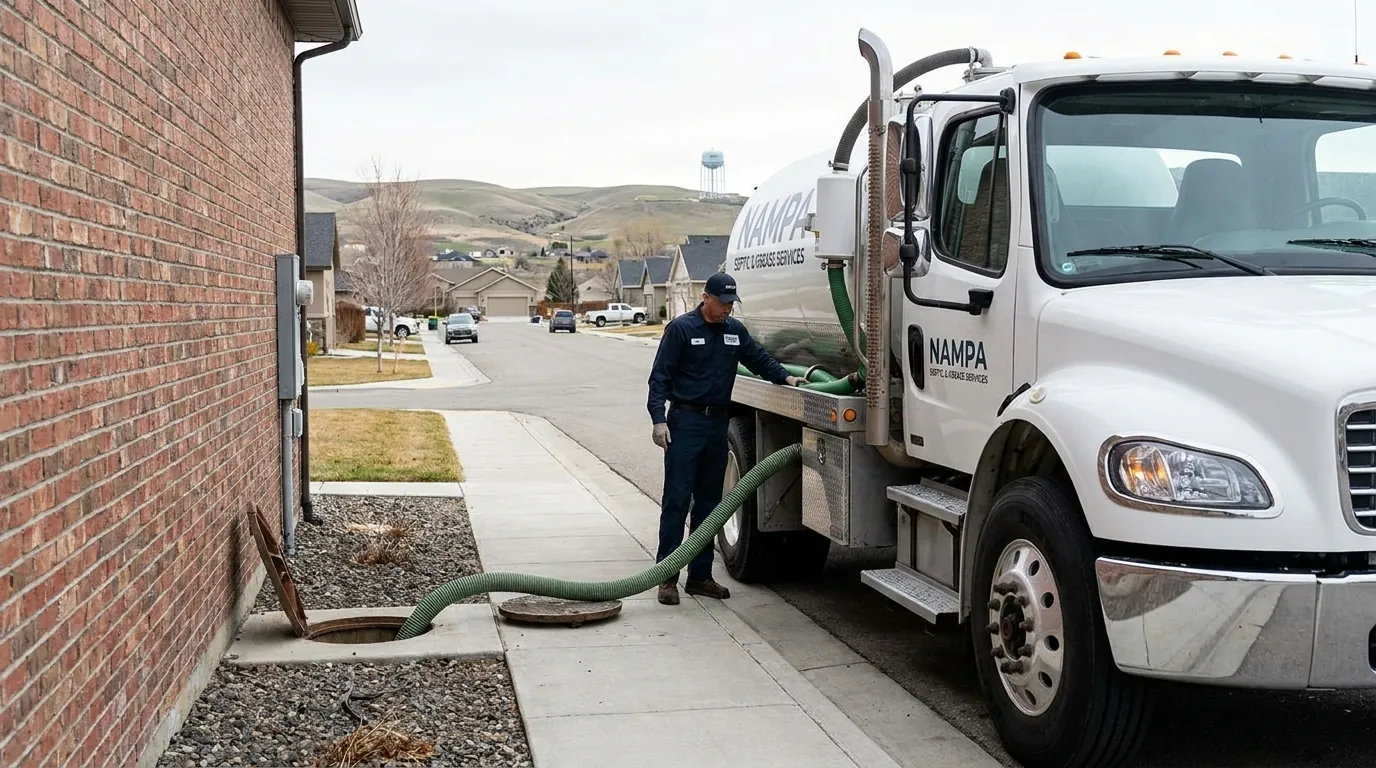
Why grease traps need regular service
A grease trap captures fats, oils, and grease before they reach your drain lines and, on a septic property, before they reach the tank and drain field. Grease that gets past the trap coats pipes, hardens, and eventually chokes off flow — the leading cause of backups in commercial kitchens. On a septic system, grease that reaches the tank builds a thick scum layer that crowds out working volume and can carry into the drain field, where it is far more damaging and expensive to deal with.
For Nampa-area restaurants, cafes, and any kitchen that produces grease, regular trap pumping is basic protection for the whole plumbing and septic system. Letting a trap overfill is how a small scheduled cost turns into an emergency in the middle of service.
What grease trap pumping involves
Service is quick when it is on a schedule and the trap is accessible.
-
Open and assess the trap
We open the trap and check how much grease and solids have collected against the trap's capacity, which tells us whether your interval is right.
-
Pump the full contents
We remove the entire grease cap, the settled solids, and the water, so the trap starts fresh rather than partially cleaned.
-
Check the baffles and fittings
We look at the internal baffles and inlet and outlet fittings for grease buildup or damage that would let grease pass straight through.
-
Set a realistic interval
Based on how full the trap was, we recommend a service frequency that keeps grease from ever reaching your lines or septic tank.
Grease and the septic system
On properties around Nampa that run on septic rather than city sewer, a grease trap is doing double duty: protecting the drain lines and protecting the septic system downstream. Cold Idaho winters make grease firm up faster, so a trap that flowed fine in summer can clog quickly once temperatures drop. That seasonal shift is a good reason to tighten the service interval heading into winter.
If grease has already reached your tank, it shows up as a thick, hard scum layer that a routine visit may not fully clear — that is where septic tank cleaning comes in. And any commercial system benefits from a periodic septic system inspection to confirm grease is not carrying through to the field. We provide grease trap pumping in Nampa, Caldwell, Meridian, Star, Kuna, Eagle, and Boise City.
Frequently asked questions
How often does a grease trap need to be pumped?
It depends on trap size and how much grease your kitchen produces, and many kitchens follow a rule based on how full the trap gets between visits. We measure the buildup on each service and set an interval that keeps grease out of your lines, tightening it before winter when grease firms up faster.
What happens if I let the trap overfill?
Grease passes straight through into your drain lines and, on a septic property, into the tank and drain field. That causes clogs and backups that are far more expensive and disruptive than routine service, often at the worst possible moment during service hours.
Does grease hurt a septic system?
Yes. Grease that reaches the tank builds a heavy scum layer that reduces working capacity and can carry into the drain field, where it clogs the soil. Keeping grease captured at the trap protects the whole system downstream.
Do you serve commercial kitchens outside Nampa?
Yes. We handle grease trap pumping across the Treasure Valley, including Caldwell, Meridian, Star, Kuna, Eagle, and Boise City, on schedules that fit around kitchen hours.
Talk to someone about your job
Call to describe the problem and get a quote for work in Nampa, ID.