Drain Field Service in Nampa, ID
Drain field service in Nampa and the Treasure Valley. Spot a failing leach field early and learn how local soil and water table affect it.
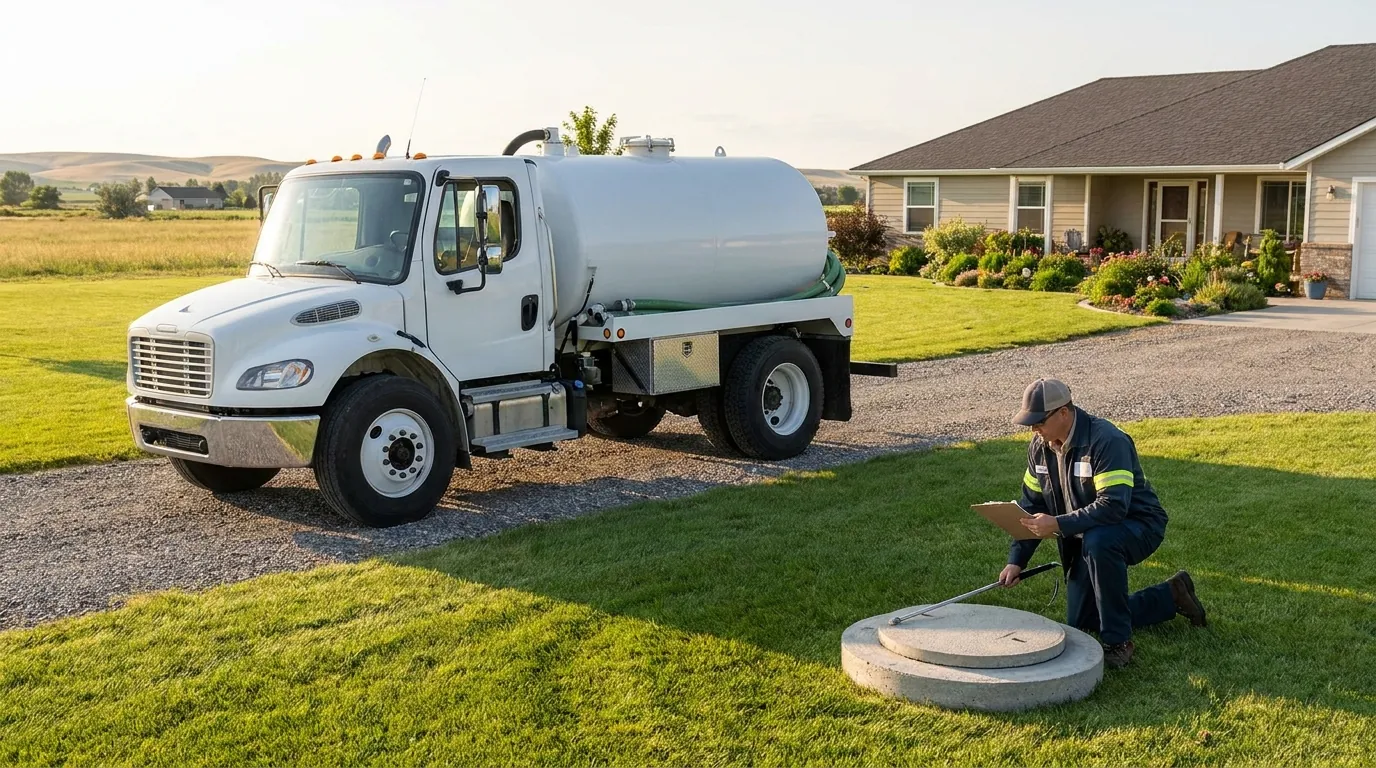
How the drain field fails
The drain field, or leach field, is the network of buried pipe and gravel that receives liquid effluent from the tank and lets it filter down through the soil. It is the part of the system that quietly does the hardest work, and it is the most costly part to replace. Fields fail two ways: solids escaping a neglected tank clog the soil and pipe, or the field simply reaches the end of its natural life as the soil around it loses its ability to absorb.
The warning signs show up at the surface. Watch for standing water, spongy ground, or a strip of unusually lush, dark green grass over the field; sewage odors outdoors; and drains throughout the house slowing at once even though the tank was recently pumped. When those appear, the problem has moved past the tank. Catching it early — often through a septic system inspection — is the difference between a manageable fix and a full replacement.
What drain field service involves
The goal is to relieve and protect the field, then address why it struggled.
-
Confirm the tank is not the cause
We start by checking and pumping the tank if needed, because a tank overflowing solids into the field is the most common and most fixable reason a field backs up.
-
Locate and evaluate the field
We identify the field's layout and look at how saturated the soil is, where effluent is surfacing, and whether the distribution is even across the lines.
-
Relieve the load
Reducing the incoming load and clearing any tank-side blockage gives a stressed field a chance to recover, especially when it was overwhelmed rather than worn out.
-
Advise on next steps
Depending on what we find, that may mean adjusting water use, correcting a tank problem, or planning for field work. We lay out the realistic options rather than jumping to the most expensive one.
Treasure Valley soil and the water table
Drain fields live or die by the soil around Nampa. Fast-draining volcanic and coarse alluvial soils absorb effluent well and let fields last; tighter, siltier soils absorb slowly and stress the field, especially under a full household. Near the Boise and Snake River bottoms and in low areas of Star, Eagle, and Caldwell, a seasonally high water table can saturate the ground around the field and leave it nowhere to send effluent, so a field that copes in a dry August can surface in spring.
Because the field depends so heavily on keeping solids out of it, disciplined septic tank pumping is the best protection you have. If a field is already surfacing and backing up into the house, that is an urgent situation — see our septic emergency service. We serve Nampa, Caldwell, Meridian, Star, Kuna, Eagle, and Boise City.
Frequently asked questions
What are the first signs of a failing drain field?
Standing water or spongy ground over the field, a strip of unusually lush green grass, outdoor sewage odor, and household drains slowing all at once even after a recent pump-out. These point to the field rather than the tank.
Can a failing drain field be saved?
Sometimes. If the field was overwhelmed by solids from a neglected tank or by excess water, relieving the load and fixing the tank side can let it recover. A field that has genuinely worn out its soil is a different situation, which is why an inspection first matters.
Why does my field get worse in spring?
Around Nampa the water table rises seasonally near the river bottoms and low ground. When the surrounding soil is already saturated, the field has nowhere to send effluent, so a field that handles a dry summer can surface once the ground is wet.
How do I protect my drain field?
Keep solids out of it by pumping the tank on a realistic schedule, avoid driving or parking over the field, and manage water use so you do not overload it. Keeping roof and surface runoff away from the field also helps in wet months.
Talk to someone about your job
Call to describe the problem and get a quote for work in Nampa, ID.